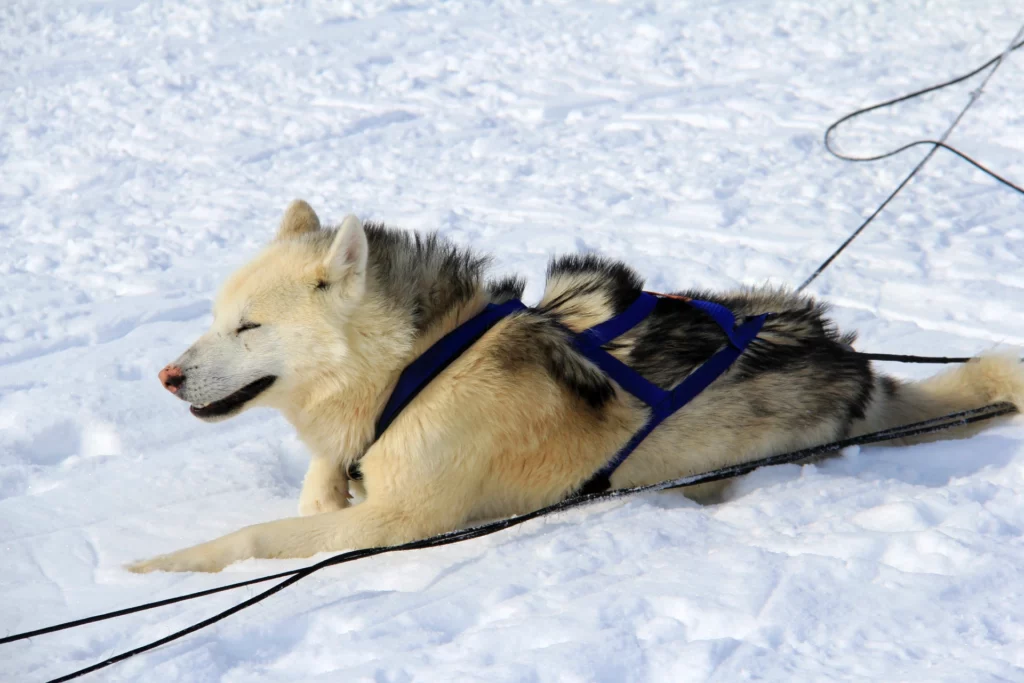
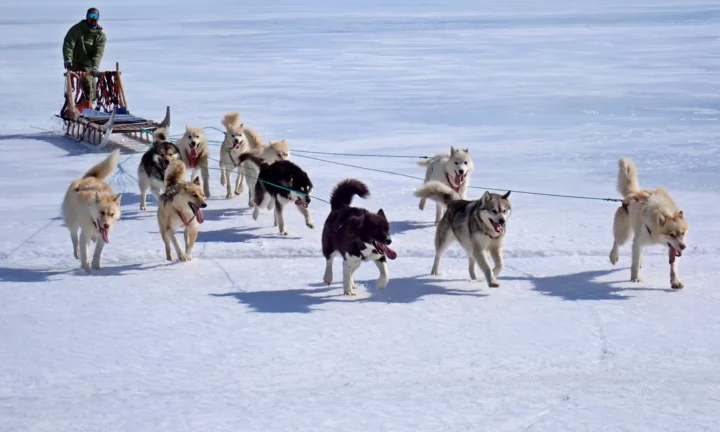
For thousands of years, the Inuit of East Greenland have traveled across the winter landscape by dogsled. The Greenlandic sled dog is renowned for its strength and resilience, capable of pulling heavy loads over long distances.
If you’ve visited East Greenland, chances are you’ve seen sled dogs around villages and towns. In Greenland, there is only one type of sled dog, known as the Greenlandic Sled Dog (Canis lupus familiaris). These dogs are not only strong and resilient but also highly social, thriving in the company of other dogs and making excellent team players in sled dog packs.
Facts About Greenlandic Sled Dogs
- The Greenlandic dog is a Spitz dog which are the dogs closest related to the Wolf.
- Greenlandic sled dogs are strong, intelligent, and highly social. They thrive in a pack and have a natural instinct to run and pull sleds.
- As working dogs, they live outdoors year-round and are fully adapted to the Arctic environment.
- Each dog has a specific role within the sled team, making teamwork essential for a successful journey.
- Their senses are extraordinary: they can detect their owner from far away, sense when ice is too thin, and find their way home even in dense fog or snowstorms.
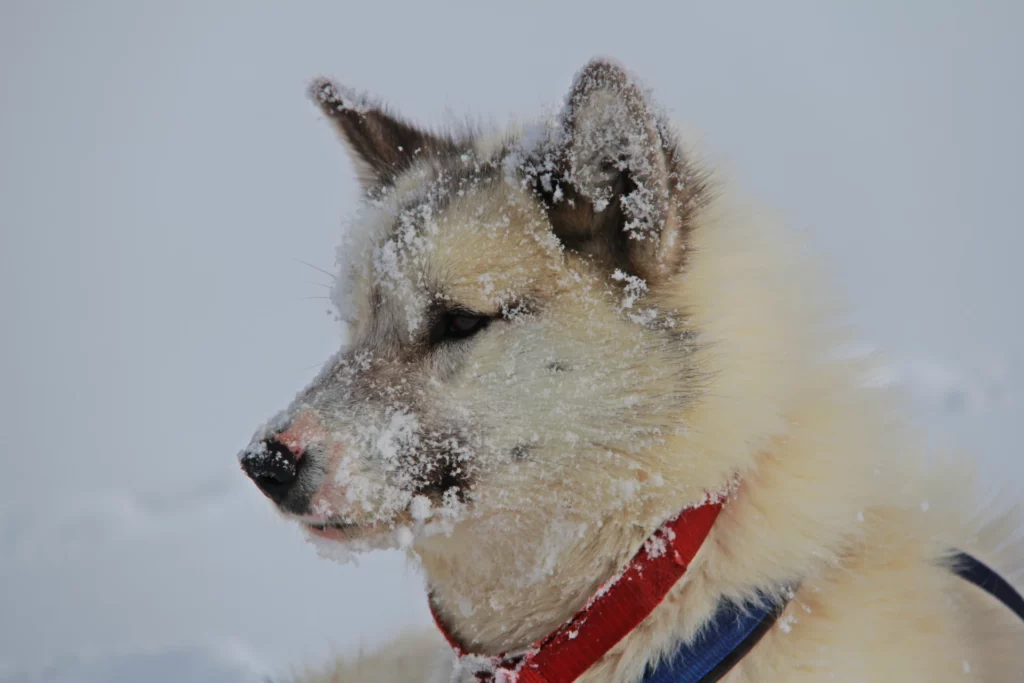
- Their fur provides insulation in winter while preventing overheating in summer, with a seasonal double shed each year.
- Sled dogs can also act as guards, producing a distinctive howl when they sense nearby polar bears, alerting humans and the pack to potential danger.
- Greenlandic sled dogs can only be kept in regions with long winters, as they need snow to remain active. An inactive dog can become unfriendly or even dangerous. Therefore, sled dogs are found primarily in East Greenland and the northern part of West Greenland, where snow conditions are sufficient.
Tradition and History
For over 5,000 years, dogsledding has been a central mode of transportation during Greenland’s long, snow covered winters. These dogs have been essential to the survival of Inuit communities, and their role is deeply woven into Greenlandic culture and heritage. Originally, sled dogs primarily supported hunting and fishing, but today many hunters also share this tradition by offering dog sledding experiences to visitors.
In East Greenland, sled dogs continue to be vital for hunting communities. However, their numbers have declined in recent years due to shifts in transportation, lifestyle changes, and variations in snow and ice conditions. While snowmobiles and other motorized vehicles provide faster travel, a dog sled journey remains a unique way to connect with the Arctic winter landscape and experience a centuries-old tradition firsthand.
How to Behave Around Sled Dogs
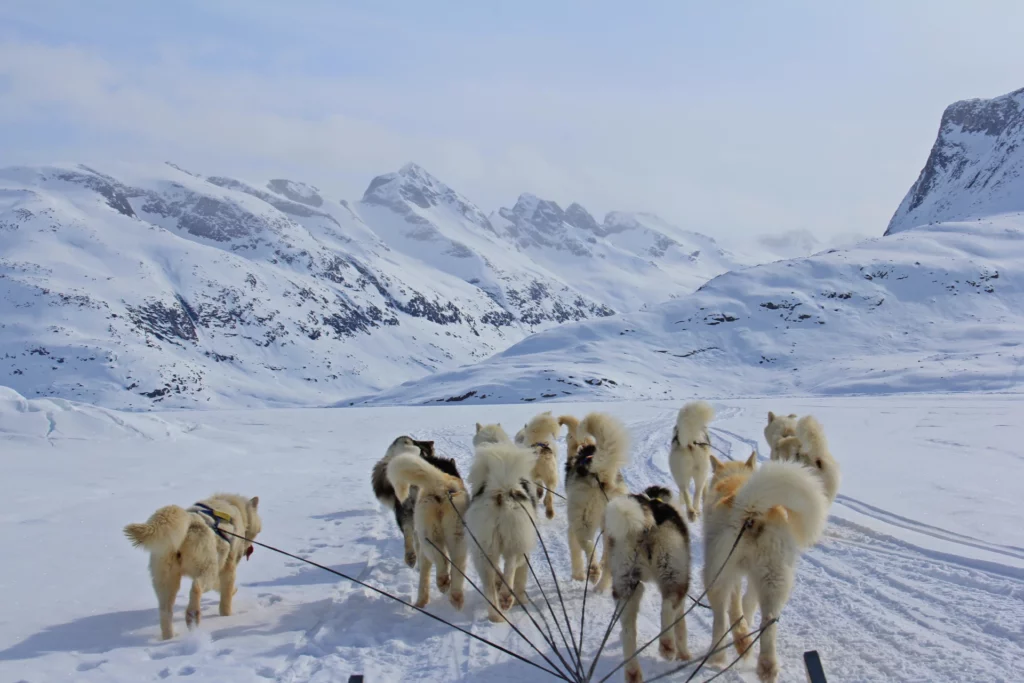
Sled dogs are not inherently dangerous, but they are working animals and can show protective or territorial behavior. Unlike household pets, they are not fully domesticated and should always be approached with care. Before interacting with any sled dog, speak with the dog handler or owner. They understand the dogs temperaments and pack dynamics best.
What to keep in mind:
- Approach sled dogs slowly and respectfully, and always ask the handler for permission before touching them.
- Pay attention to the dog’s body language. A relaxed posture or gently wagging tail usually signals comfort, while stiff movements, raised hackles, or growling can indicate stress or unease.
- Sled dogs are highly sensitive to human energy. Staying calm and composed helps create a safer and more positive interaction.
- Follow the handler’s guidance at all times. They know how each dog prefers to be approached and can help ensure everyone’s safety.
- Puppies are often curious and friendly, but extra caution is needed if the mother is nearby, as she may be very protective of her young.
Dogsledding
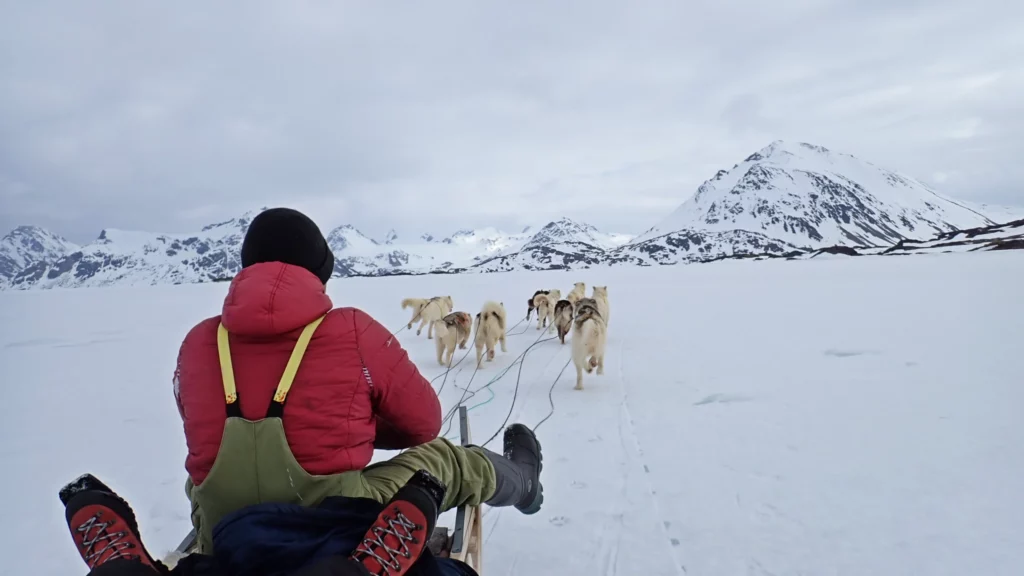
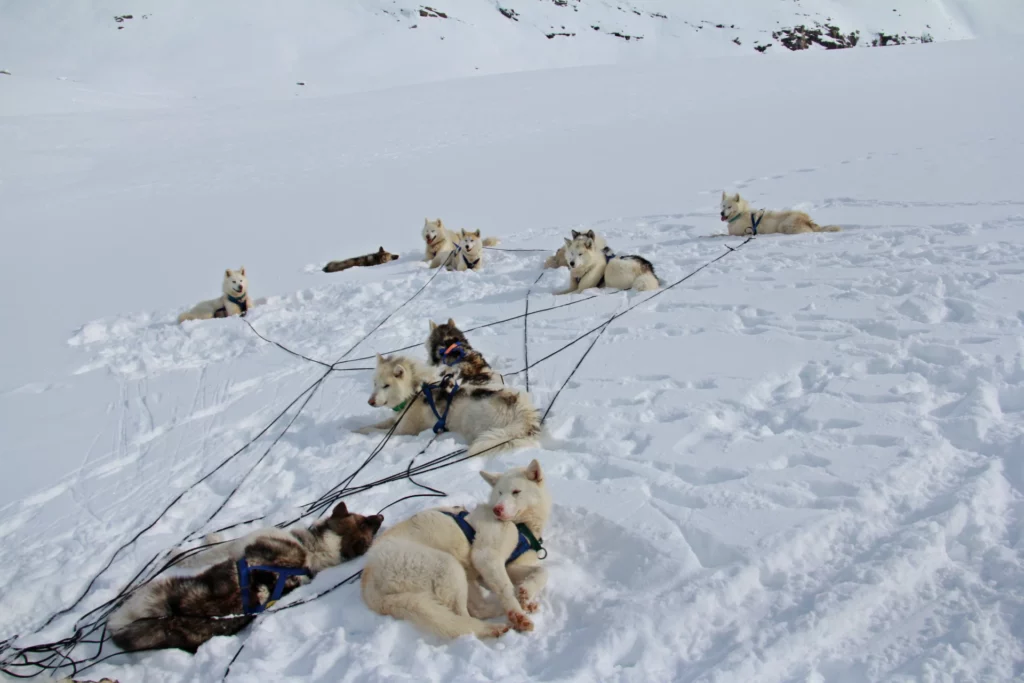
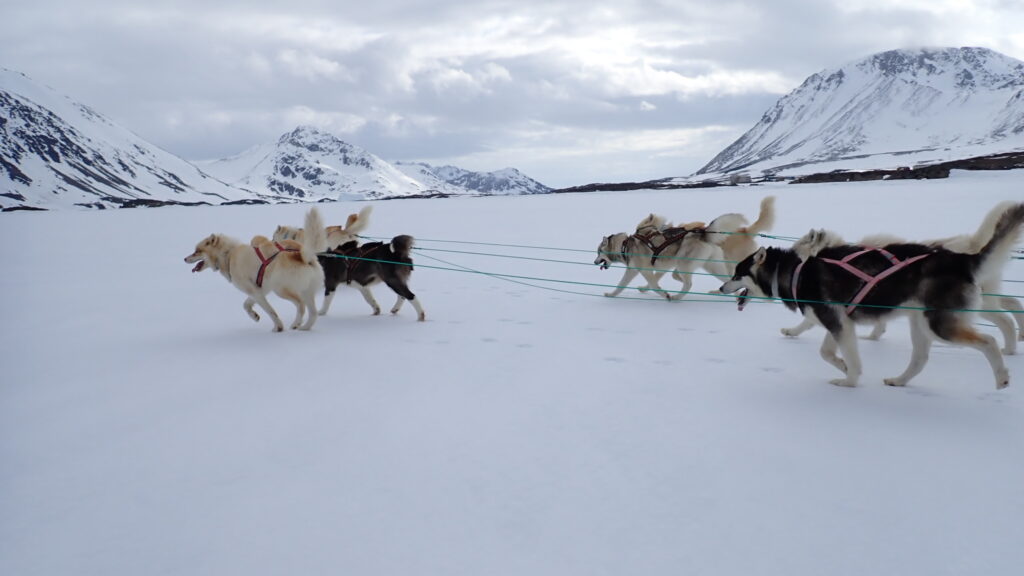
You should try riding a dog sled if you get the chance as it is an amazing experience which gives you a lot of impressions. The bond between the hunter/dog handler and his dogs is strong, and is even closer when running with the dog sled. Sometimes, the dog handler has to be tough on the dogs, so they know who the boss is. Do not be fooled by this, as there is an incredible amount of love between him and his dogs. The dogs appreciate when he tells them who is in charge; often this means that they get to run at full speed, which you can see they love. Modern East Greenlandic hunters typically work with teams of 10 to 14 dogs, allowing for a wonderful and relaxed mode of travel through Greenland’s spectacular alpine landscape.
Experience Dog sledding through our Greenlandic Dogsled expedition
Our Greenlandic dogsled expedition offers an authentic, unplugged journey through East Greenland’s winter wilderness. You’ll explore small hunting settlements, cross frozen ocean expanses, and reach glaciers that calve directly into the sea. Along the way, we learn about Inuit culture, visit ancient winter house ruins, and marvel at jagged mountain peaks and icebergs frozen into the sea ice. The trip includes short snowshoe walks, nights in tents, and traditional modes of travel, creating a truly unique Arctic adventure. One highlight is the old Ikatek airbase, a World War II site tucked into the snow, almost surreal to explore.
Dogsledding expeditions offer a rare connection to both the winter landscape and Inuit traditions. Traveling with local mushers across frozen ocean ice, you’ll pass island mountains and small hunter settlements, experiencing the land as East Greenlandic hunters have for generations.
What makes this trip truly special is the sledding itself. Guided by strong, steady Greenlandic sled dogs who know the terrain better than anyone, you’ll move across the ice exactly as hunters have done for centuries. It’s one of the most exhilarating ways to immerse yourself in East Greenland’s breathtaking winter scenery. While the vast, tranquil landscape surrounds you, each moment on the sled is charged with freedom and excitement, leaving unforgettable memories of Greenland’s captivating winter beauty.