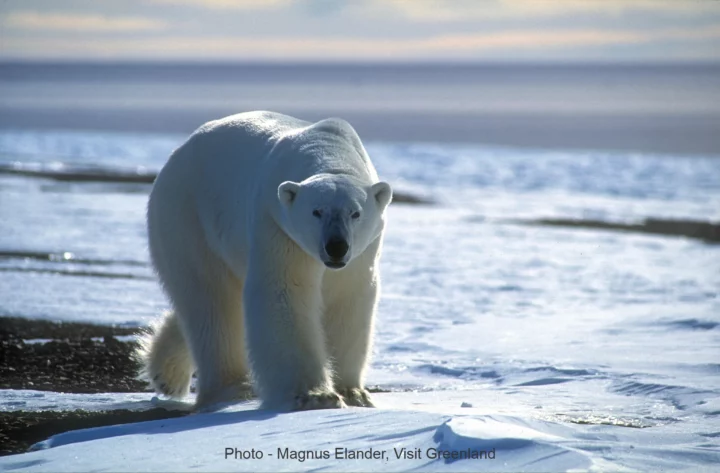
Lone polar bear.

Exploring the Wild: The Remarkable Fauna of East Greenland — By Foot and By Sea

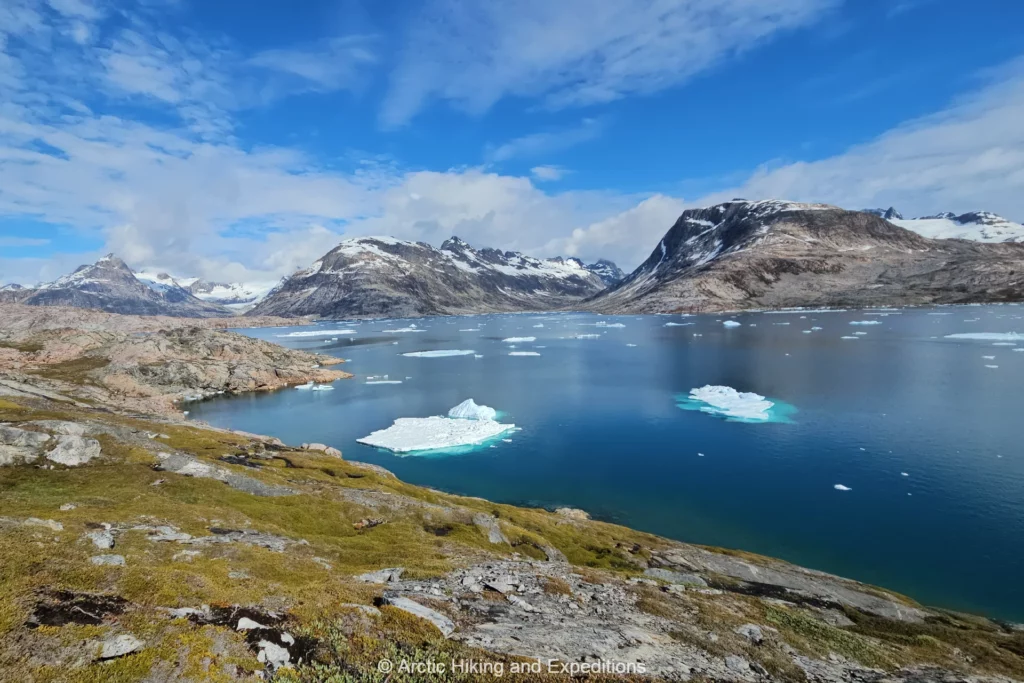
East Greenland is a place where scale dominates everything: vast fjords cut deep into the land, glaciers spill slowly toward the sea, and mountains rise abruptly from tundra valleys. For visitors joining our guided journeys, this dramatic landscape becomes the setting for close encounters with Arctic wildlife—experienced not from a distance, but while hiking through it and traveling by boat along its coast.

Unlike more accessible Arctic destinations, East Greenland remains truly wild. There are few settlements, no roads between towns, and no infrastructure beyond what expedition teams bring with them. This remoteness is exactly what allows its fauna to thrive.

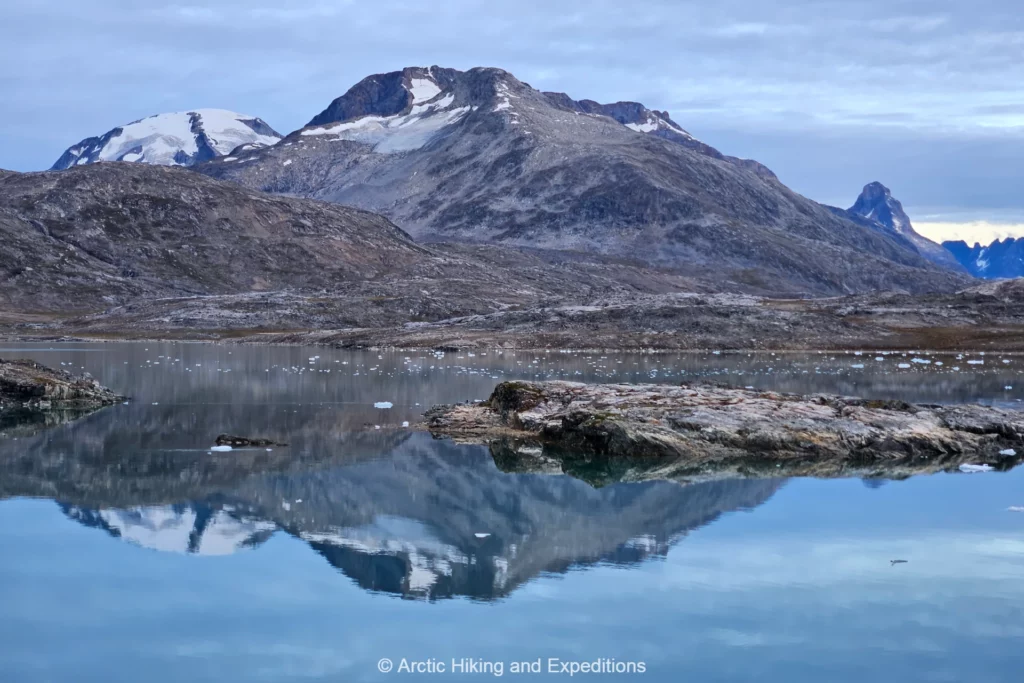
View from Sapulit campsite East Greenland

Life Along the Fjords: Wildlife Encounters on Boat Trips

Boat travel is an essential part of most East Greenland expeditions, linking hiking routes, camps, and remote landing sites. Moving quietly through iceberg-filled fjords—often by small expedition boats—you enter the heart of the Arctic marine ecosystem.

Whales in Summer Feeding Grounds

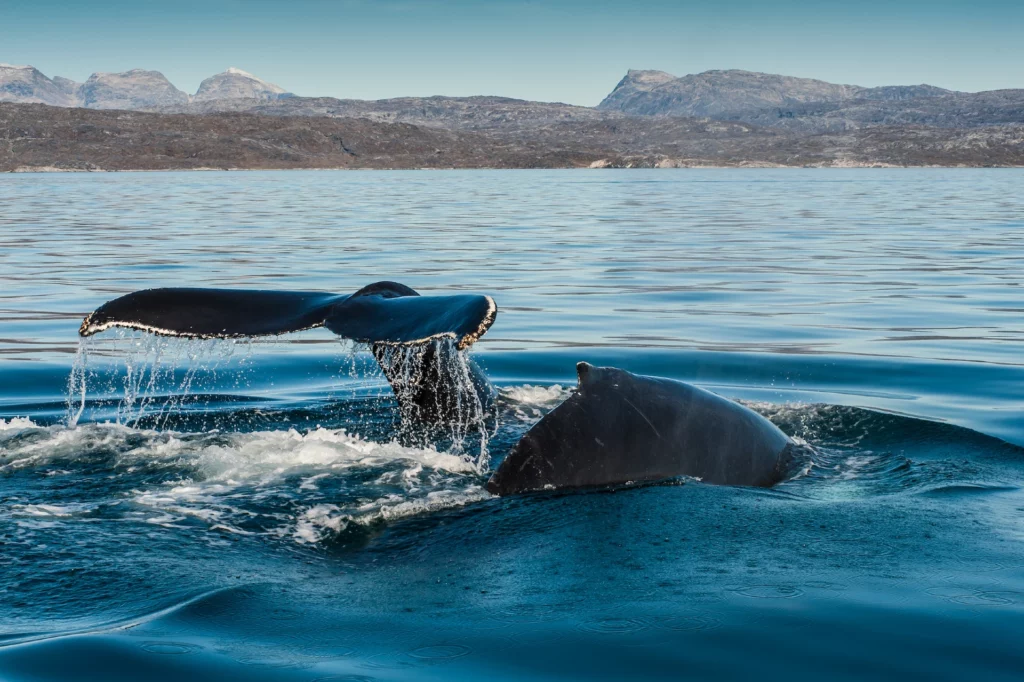
During the summer months, East Greenland’s fjords become rich feeding areas for humpback, minke, and fin whales. These whales follow plankton and fish into sheltered waters, and it’s not uncommon for boats to pause engines while whales surface nearby. Travelers on coastal expeditions around Sermilik Fjord or Scoresby Sund often experience multiple sightings in a single journey.

Humpback whales diving.
Humpback whales diving near Nuuk. Photo - Camilla Hylleberg, Visit Greenland
Seals and Ice Floes

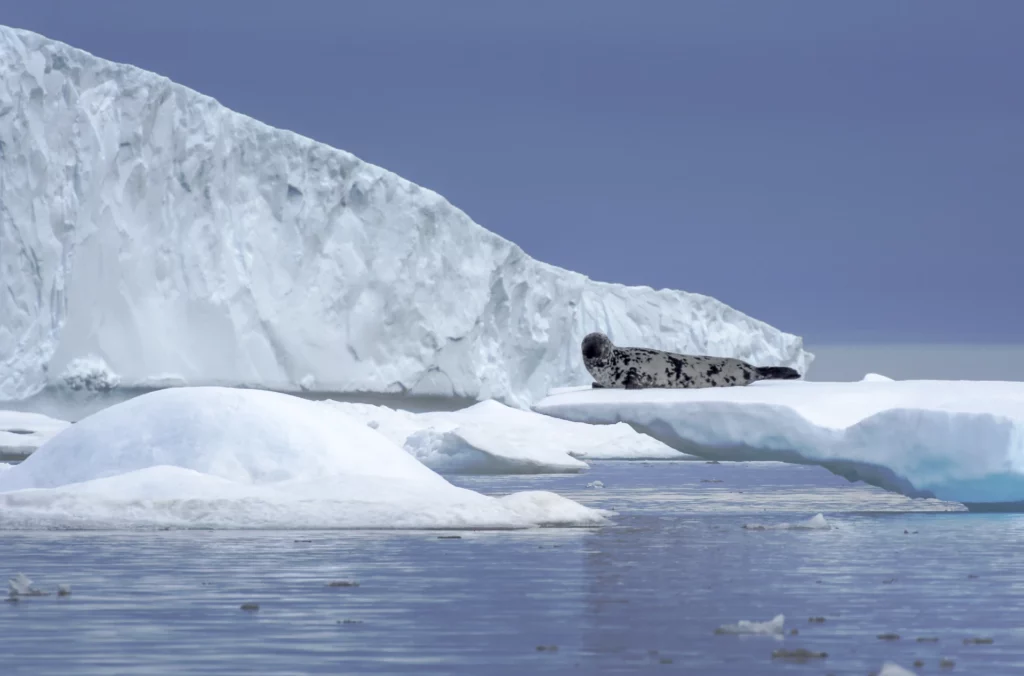
Seals are the most consistently observed marine mammals. Ringed, harp, and bearded seals rest on drifting ice or swim between bergs, often raising their heads to observe passing boats. They are shy though so you have to be quick

Ringed seal lying on sea ice.
Ringed seal lying on sea ice. Photo - Aqqa R. Asvid, Visit Greenland
Polar Bears: Rare in Summer

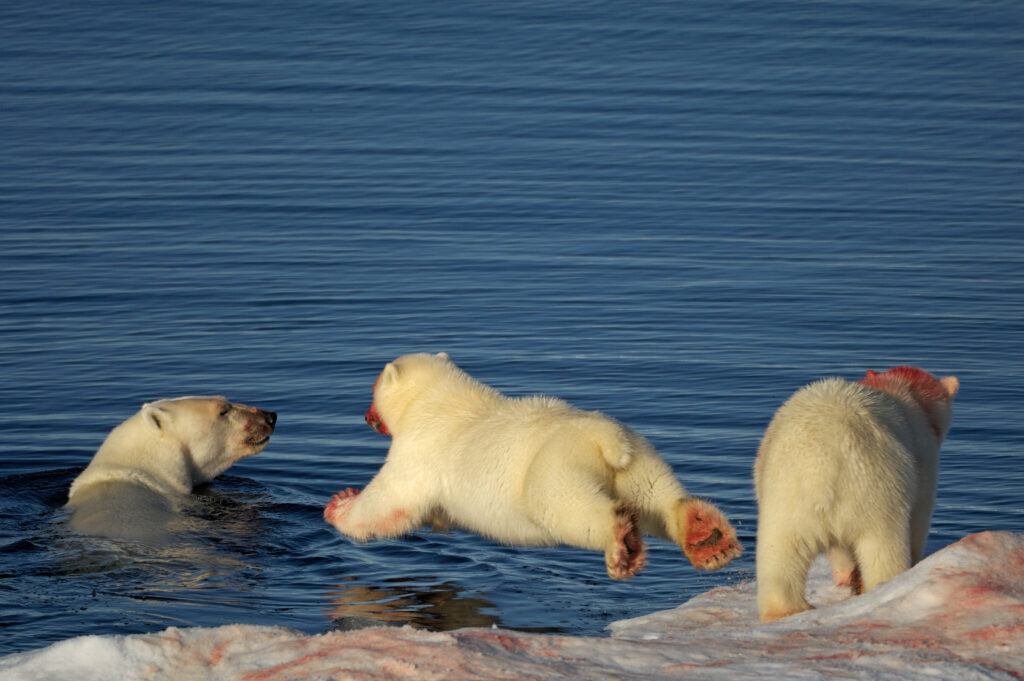
Although polar bears are iconic to Greenland, they are almost never present in East Greenland during summer expeditions. As the sea ice retreats north, bears follow it to continue hunting seals. This seasonal absence is often explained during guided boat trips, offering important insight into Arctic ecology and the impact of changing ice conditions. Winter and early spring are the only times bears are likely to be encountered in this region.

Polar bear with cubs just finished eating seal. Photo by Magnus Elander - Visit Greenland
Seabird Cliffs

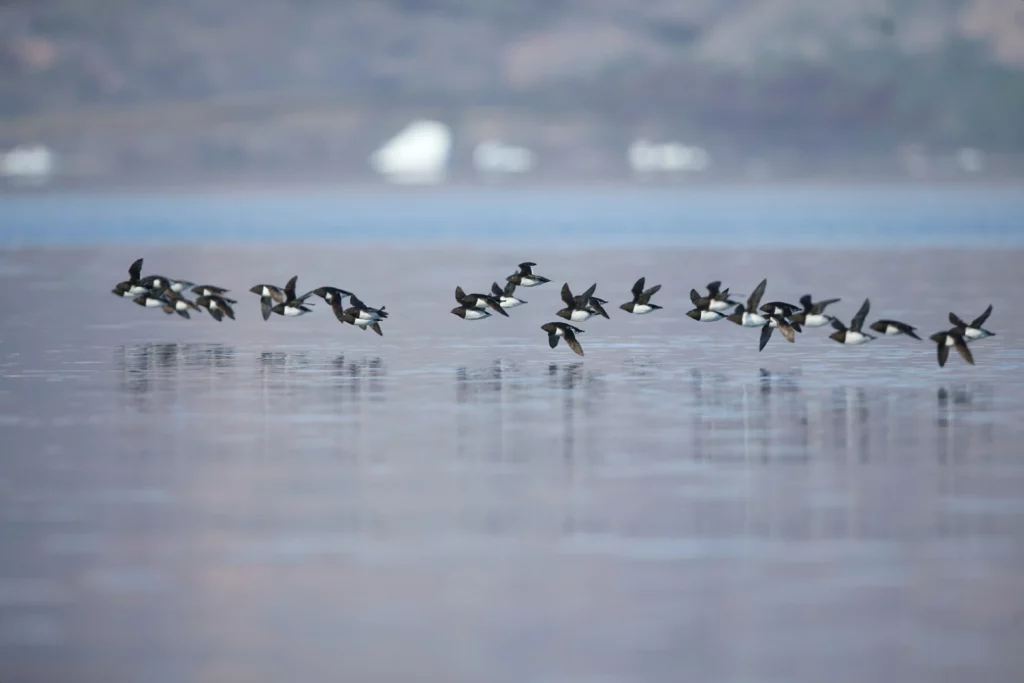
Boat routes frequently pass beneath towering cliffs alive with nesting birds. Thousands of little auks, kittiwakes, and guillemots create one of the Arctic’s most dramatic wildlife spectacles. The noise, motion, and sheer density of life stand in striking contrast to the surrounding silence of ice and rock.

Flock of little auks.
Flock of little auks. Photo - Glenn Mattsing, Visit Greenland

Hiking the Tundra: Wildlife Encounters on Foot

Hiking is at the core of many journeys highlighted by Arctic Hiking and Expeditions. These treks often follow unmarked routes across tundra plateaus, through glacial valleys, and along ridgelines overlooking fjords—landscapes where wildlife sightings feel earned rather than staged.

Arctic Foxes and Smaller Mammals

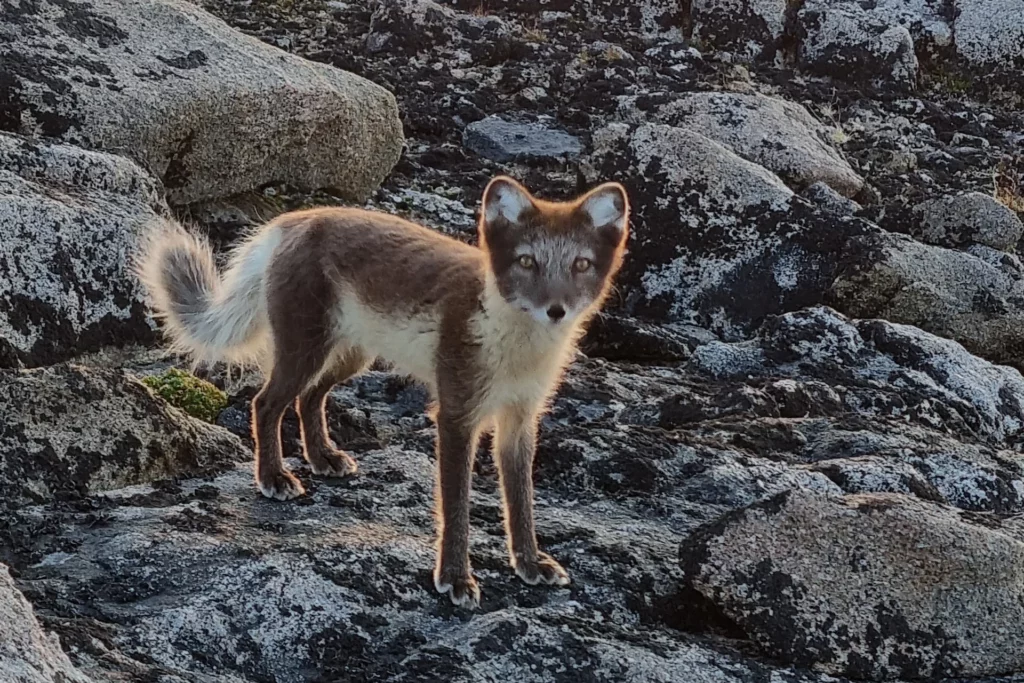
Arctic foxes are among the most common mammals encountered on foot. Curious and quick, they are often spotted near camp areas or moving along rocky slopes. Arctic hares and lemmings are less conspicuous but leave clear signs of life in tracks and burrows scattered across the tundra.

An Arctic Fox on a mountaintop on Kulusuk Island East Greenland.
An Arctic Fox on a mountaintop on Kulusuk Island East Greenland. Photo by Kristinn Gardarsson.
Birdlife on the Trail

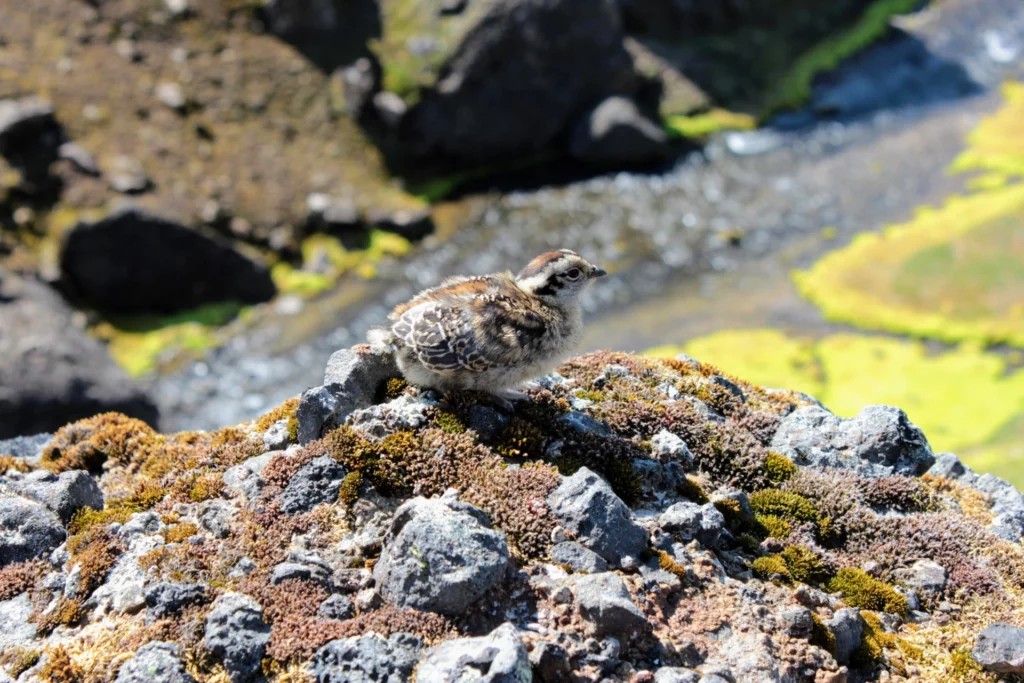
Summer transforms the tundra into a breeding ground for birds. Hikers frequently encounter snow buntings, ptarmigans, and aggressively protective Arctic terns, whose aerial dives are a memorable (and sometimes amusing) part of trekking in nesting areas. Wetlands and lakes along longer routes often host long-tailed ducks and red-throated divers.

Lorem ipsum dolor sit amet, consectetur adipiscing elit. Ut elit tellus, luctus nec ullamcorper mattis, pulvinar dapibus leo.

Ptarmigan chick
Musk Ox: Icons of the Interior

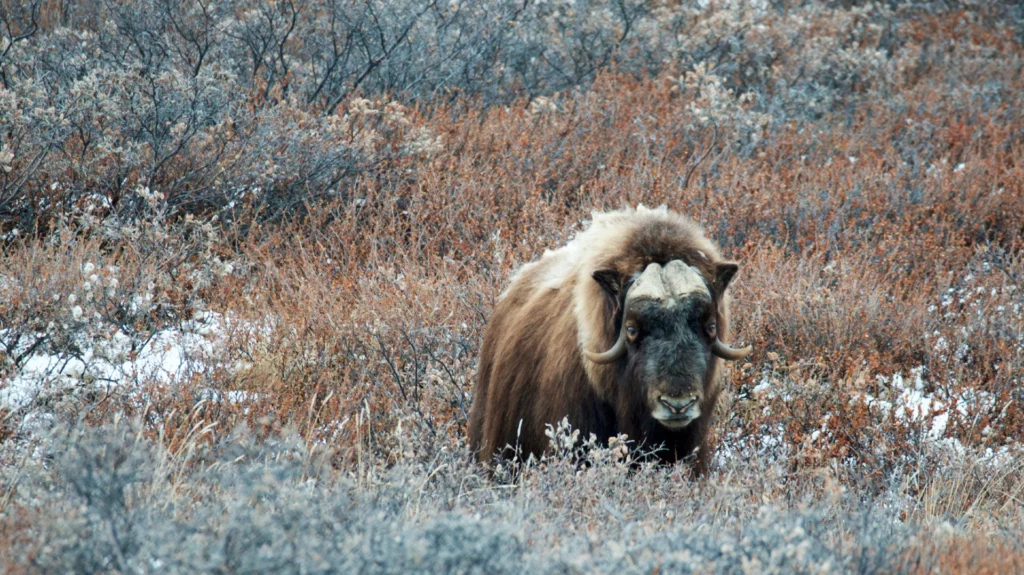
Multi-day hikes into inland valleys frequently bring encounters with musk ox. These powerful, shaggy animals graze calmly on lichen and grasses, seemingly unfazed by wind or cold. Seeing a herd from a distance—often while stopping for lunch or crossing a wide valley—is a defining East Greenland experience.

Muskox Between Plants in Autumn.
Muskox Between Plants in Autumn - Adam Lyberth, Visit Greenland
Glaciers, Ice, and Elevated Vantage Points

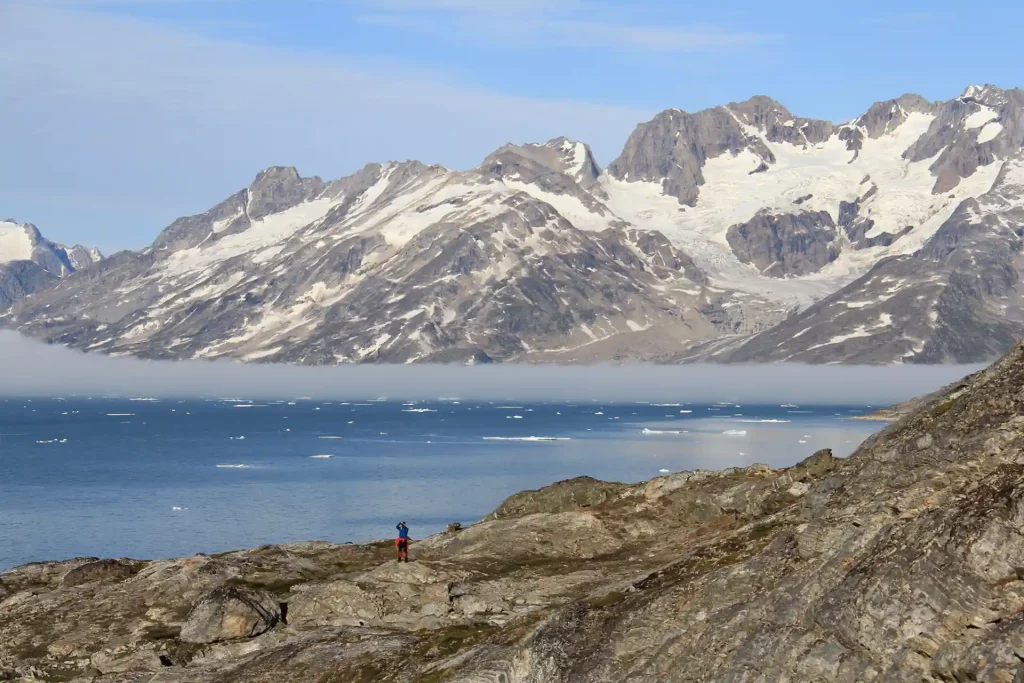
Many trekking routes lead to glacier fronts or high viewpoints overlooking fjords. From these elevated positions, hikers may spot seals on ice below or distant whale blows offshore—linking the land and sea ecosystems into a single, continuous experience.

Hikers in Karale Fjord East Greenland.
Overlooking the majestic Karale fjord East Greenland. Photo by Einar Torfi Finnsson.

Understanding a Fragile Arctic Ecosystem

A recurring theme in guided expeditions is understanding how closely wildlife is tied to seasonal rhythms. Guides often explain how sea ice governs polar bear movements, how tundra vegetation supports musk ox, and how migratory birds depend on short, intense Arctic summers.

Traveling slowly—by foot and by small boat—encourages respect for this delicate balance. Leave-no-trace practices, careful wildlife observation, and thoughtful campsite selection are standard parts of expeditions in East Greenland.

View to the north close to Tiniteqiilaq village East Greenland

Final Thoughts

Exploring East Greenland through hiking and boat travel offers more than wildlife sightings—it offers context. You don’t just see whales; you follow their feeding routes. You don’t just spot musk ox; you walk through the valleys that sustain them. And you don’t search for polar bears in summer—you learn why they’ve moved on with the ice.

For those drawn to the kind of journeys featured on Arctic Hiking and Expeditions, East Greenland delivers a rare combination of remoteness, wildlife, and immersion. It’s a place where nature sets the pace—and every step and every nautical mile deepens your connection to the Arctic world.

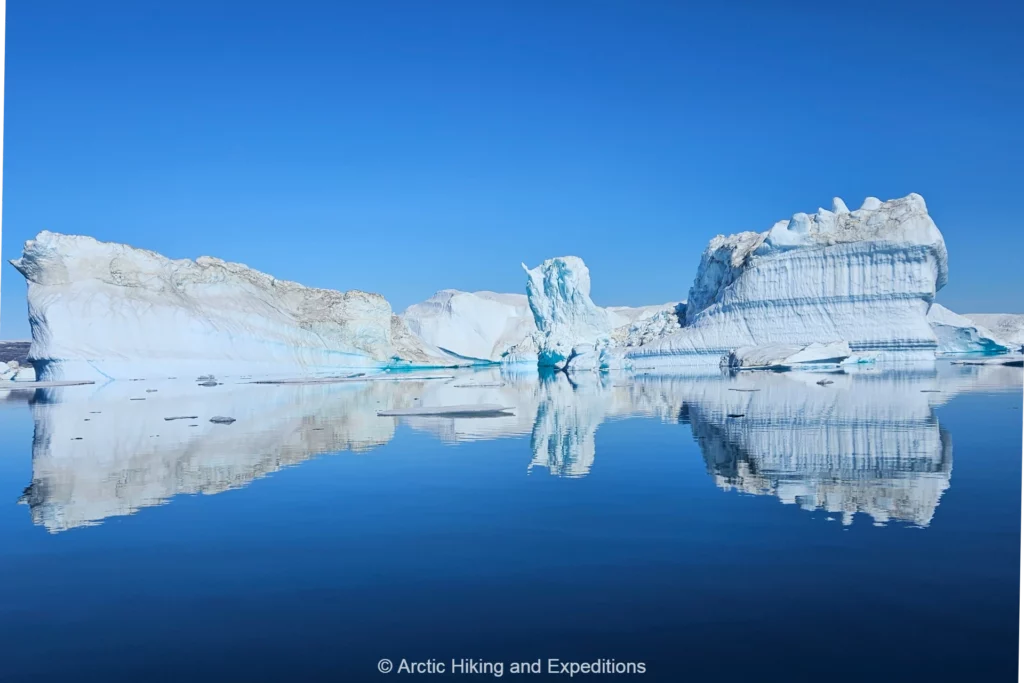
Majestic iceberg in the Sermilik Fjord East Greenland.