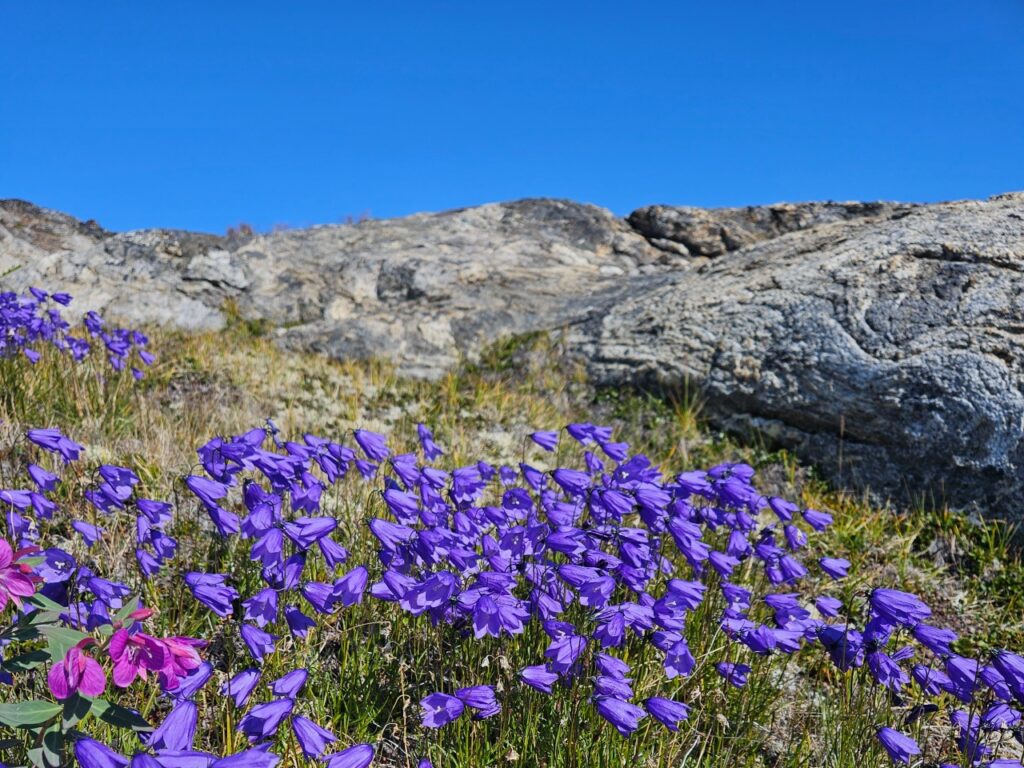
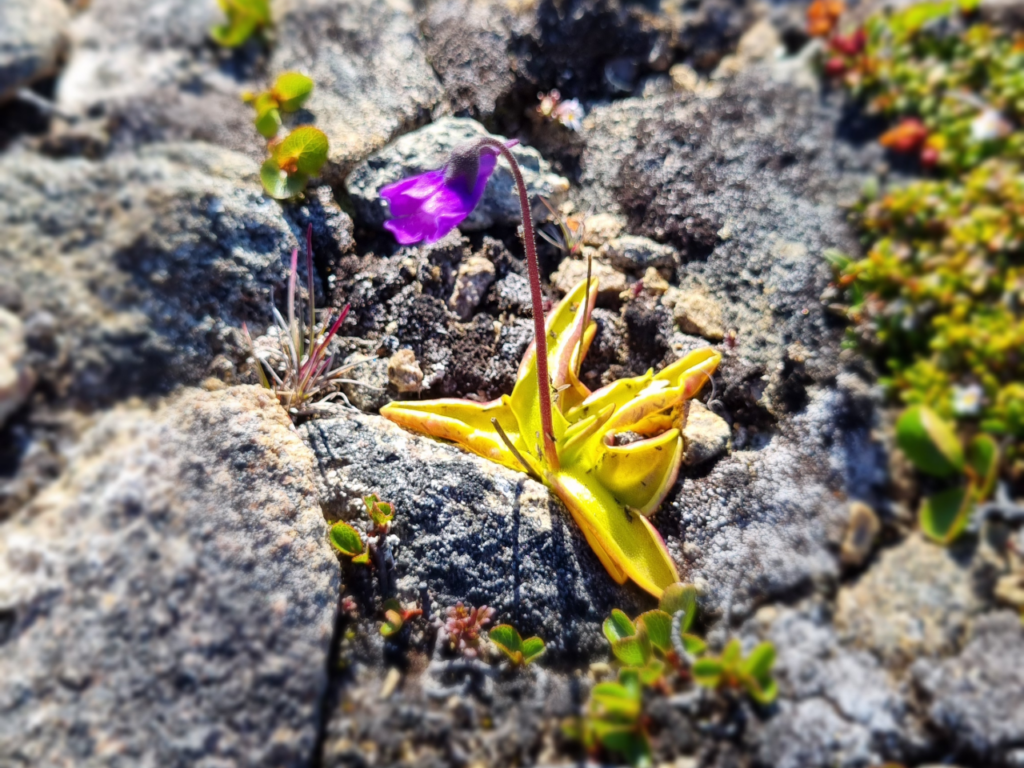
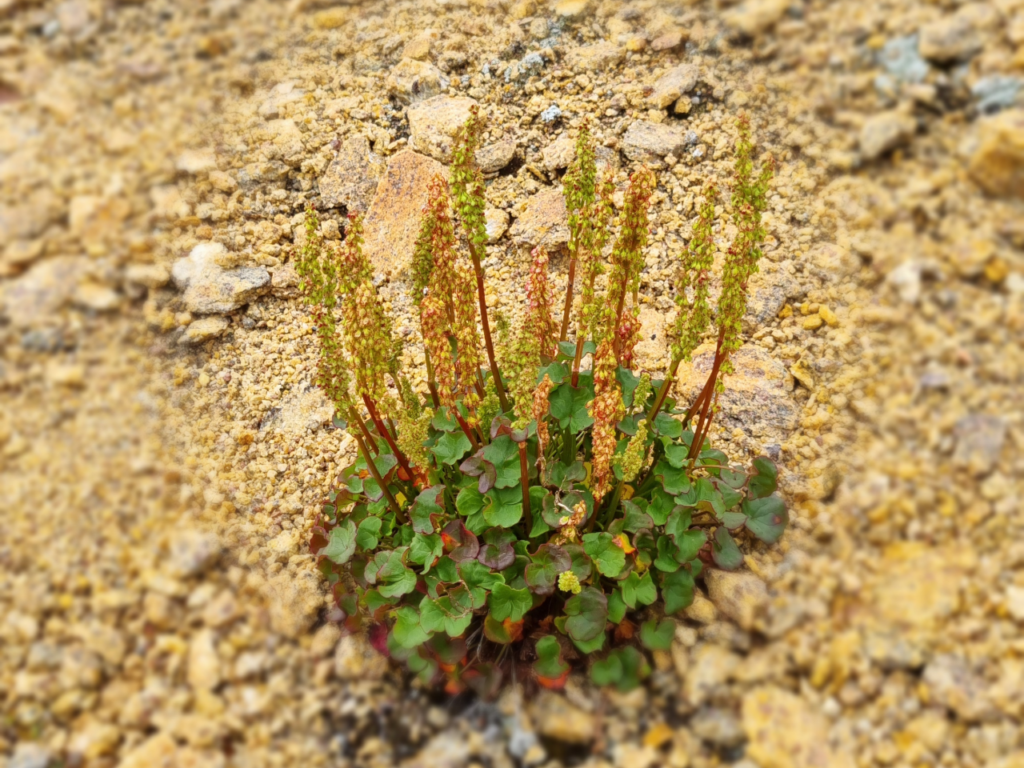
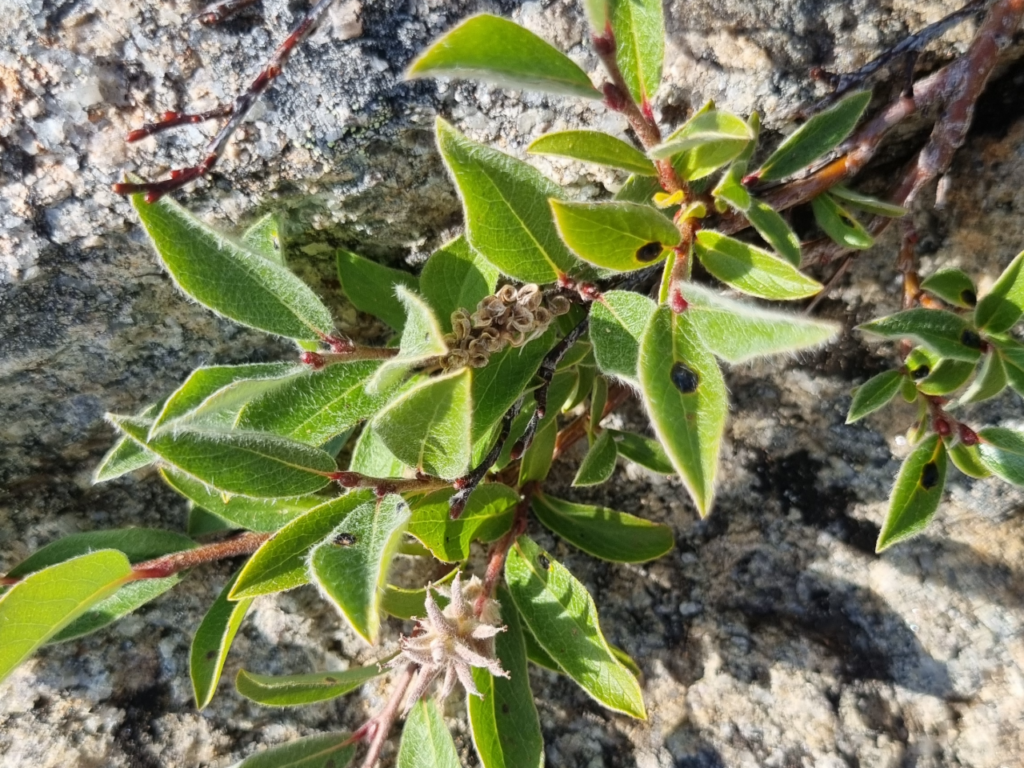
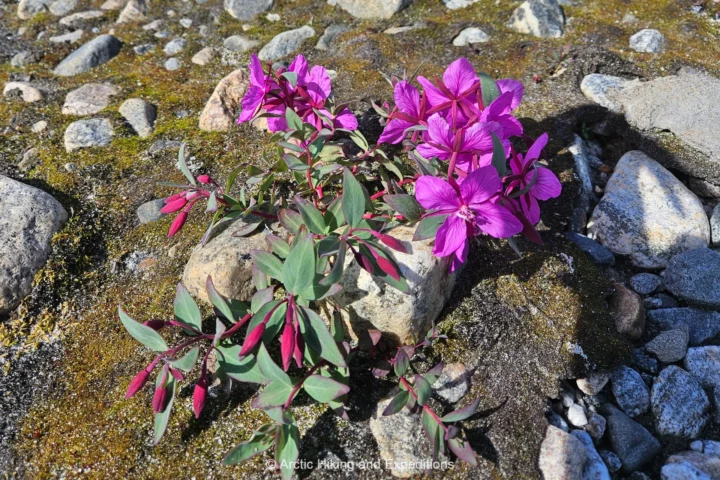
East Greenland is often described in terms of its glaciers and fjords, but anyone who hikes here quickly learns that the landscape is far more alive than it first appears. Tucked between rocks, clinging to ridges, and scattered across sheltered valleys, the flora of East Greenland forms a small but resilient community that rewards hikers who slow down and look closely.
A Landscape Where Life Is Small but Determined
This part of the Arctic has a famously short summer. Snow can linger into July, and permafrost keeps the ground frozen for much of the year. But once the sun rises high and the snow pulls back, even briefly, plants rush into action. Many are tiny — sometimes only a couple of centimeters tall — but they are perfectly adapted to wind, cold, and rocky terrain.
How They Manage It
- Cushion growth that forms warm, compact domes
- Hairy or dark leaves that hold heat
- Fast flowering cycles timed to the melt
- Roots that dig into cracks rather than soil
East Greenland’s plants survive by making the most of microhabitats: a sunny slope, a patch of gravel warmed by the midnight sun, the lee side of a boulder where snow melts early
Where Hikers Encounter Flora Naturally
You don’t need to go plant-hunting — the flowers appear right along many of the classic hiking routes.
Around Tasiilaq
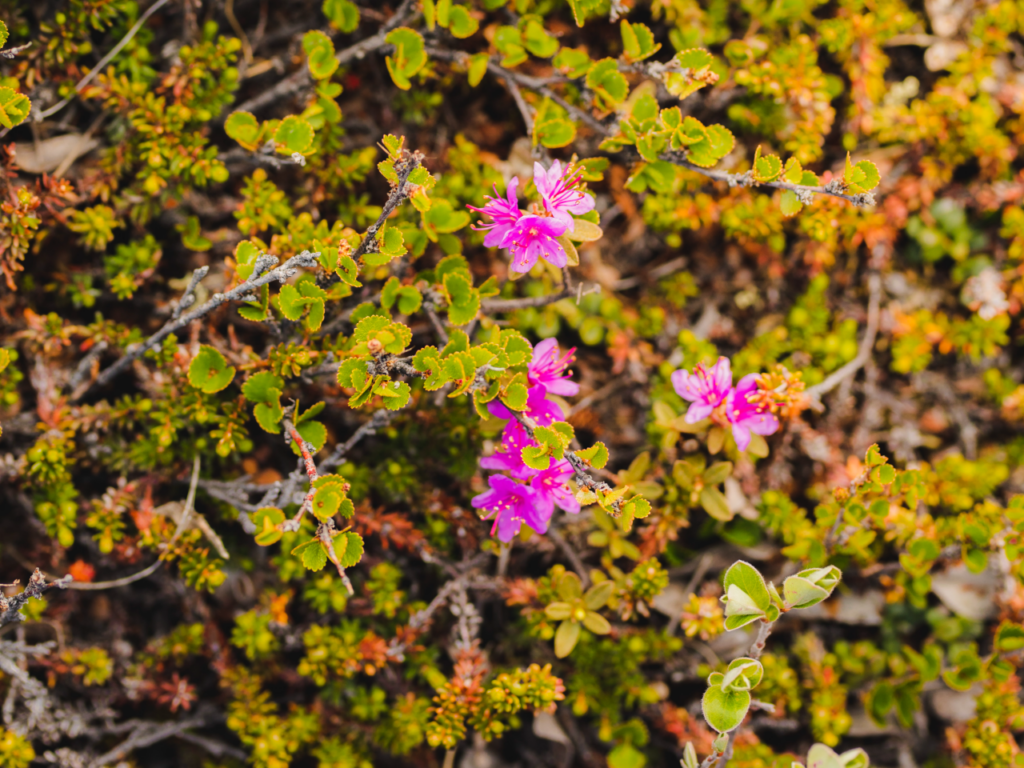
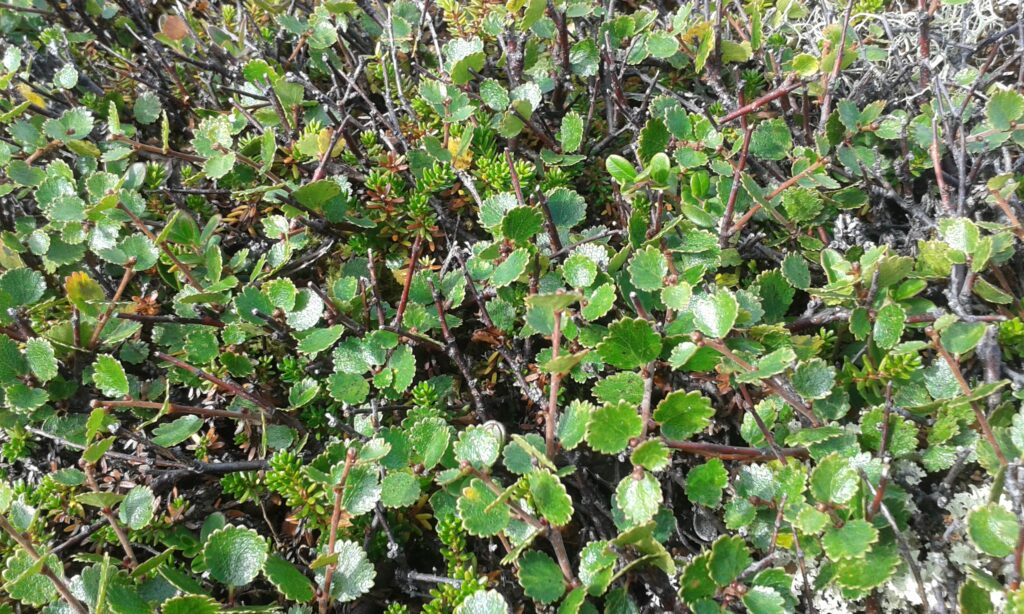
The hills above Tasiilaq are often a hiker’s first introduction to East Greenland’s flora. Even on the way up Somandsfjeldet (Sailors’ Mountain), patches of saxifrage and moss campion squeeze between rocks. Descending into the small “flower valley” near the lakes west of town, the vegetation becomes slightly more varied: dwarf birch in sheltered corners, bright pops of Arctic poppy, and lichen carpets that seem to glow in low evening light.
Across Ammassalik Island
On the crossing from the north side of Ammassalik Island toward Tasiilaq — a route some hikers take via a low mountain pass — the terrain shifts between stony ridges and small valleys dotted with lakes. These wetter spots often hold the most life. Cushion plants cluster along the edges of meltwater streams, and in midsummer you might spot the pink bursts of river beauty (dwarf fireweed) brightening gravel flats.
Ridges Near Tiniteqilaaq
The ridgeline above Tiniteqilaaq, overlooking Sermilik Fjord, is a beautiful place to see how plants survive on exposed, windy ground. Up here, growth is low—almost hugging the earth—and lichens and saxifrages dominate. The panorama of icebergs steals much of the attention, but the rocky surface at your feet is full of tiny, hardy species that flower surprisingly early.
Valleys and Slopes Around Kuummiit
In the steep mountains behind Kuummiit, meltwater streams carve narrow valleys that feel slightly more sheltered. Wherever water trickles, small mats of mosses and Arctic willow appear. Higher on the ridges, where the terrain becomes more barren, you still find clusters of purple saxifrage tucked into cracks — often blooming while patches of snow linger nearby.

Flora You’re Likely to Spot
- Purple saxifrage – A low, mat-forming plant with vivid purple flowers; one of the earliest bloomers, often flowering beside lingering snow.
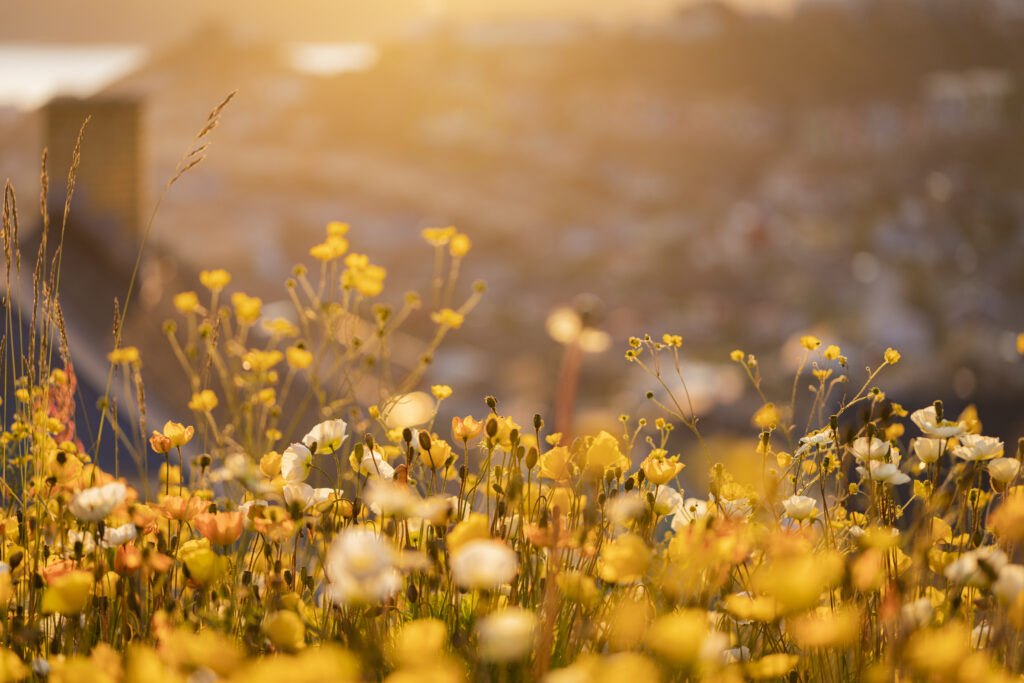
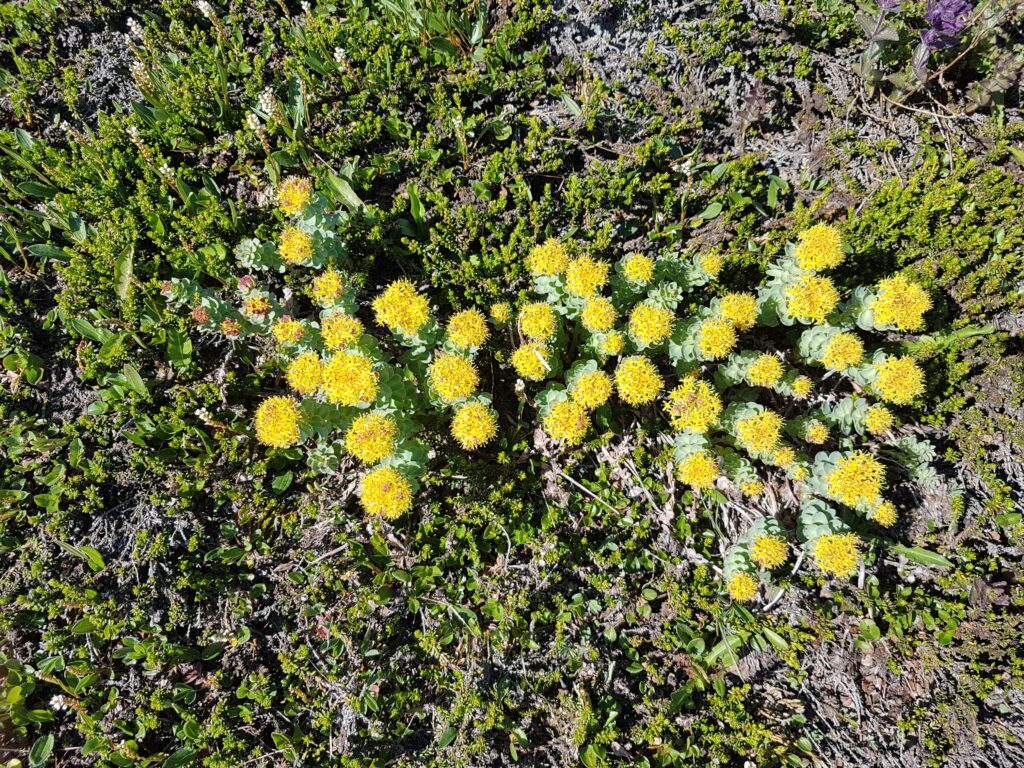
- Arctic poppy – Delicate yellow petals atop surprisingly sturdy stems; turns its flower head to follow the sun and thrives in gravelly, exposed areas.
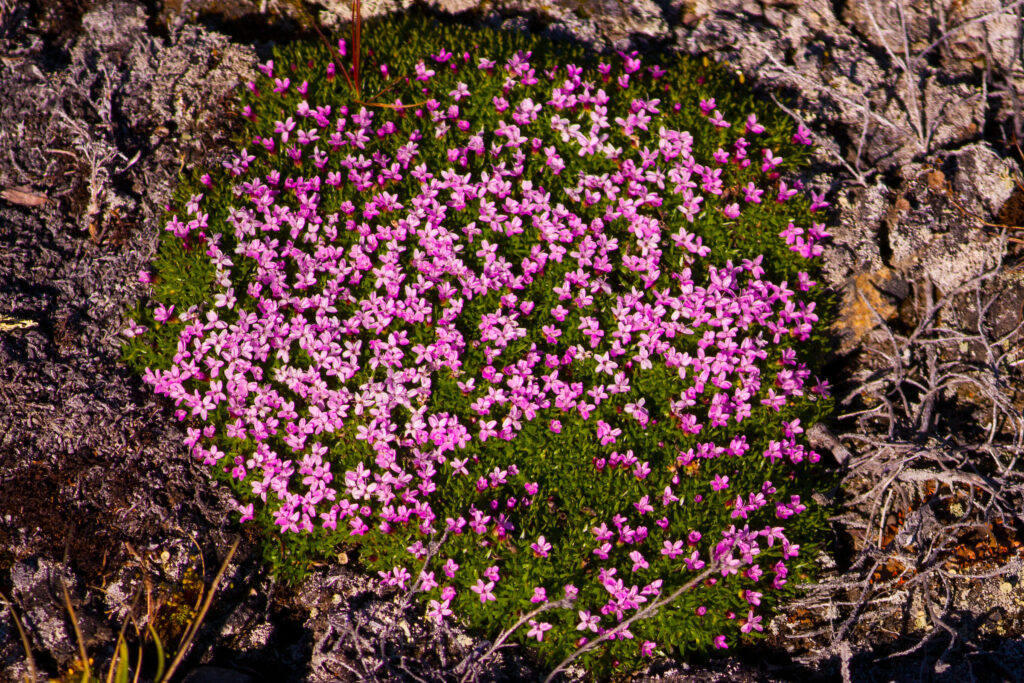
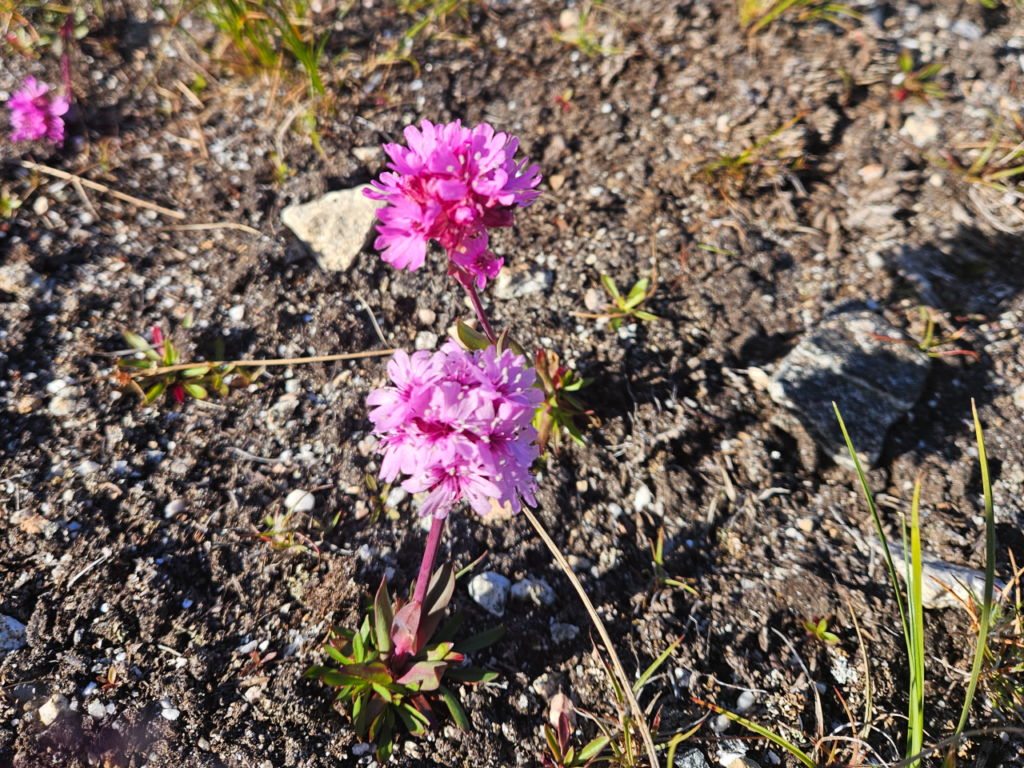
- Moss campion – Forms tight, springy cushions that can live for decades; tiny pink flowers dot its dome-like surface in midsummer.
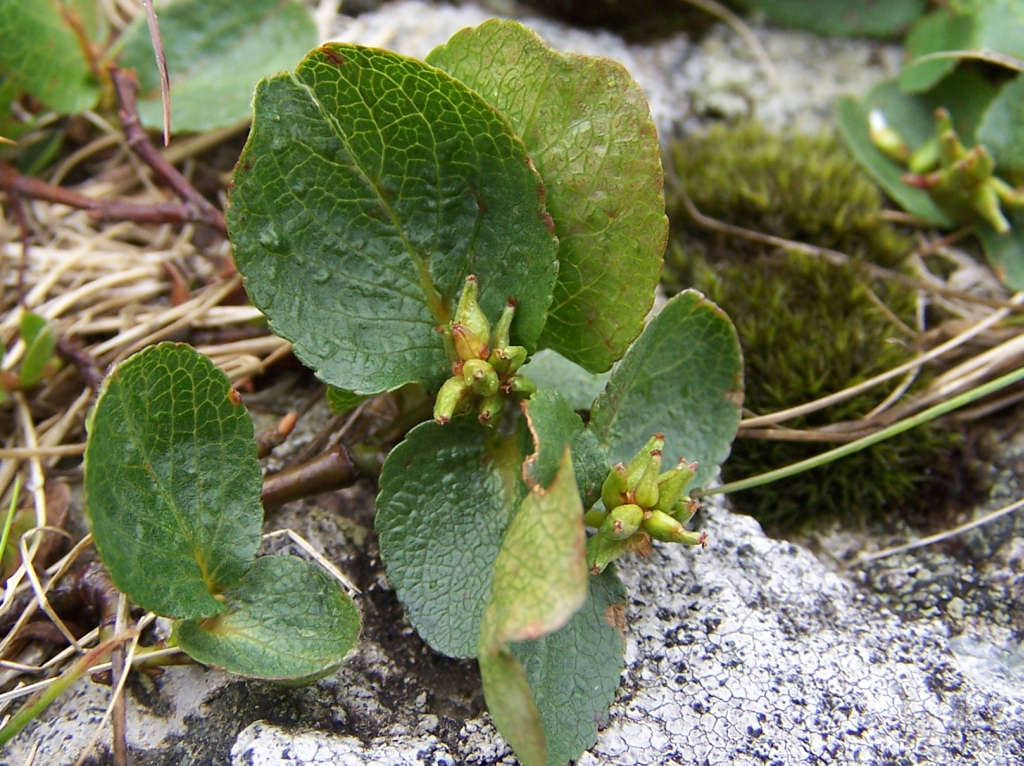
- Dwarf willow – One of the smallest willow species in the world; grows close to the ground with small, rounded leaves that help conserve warmth.
- Dwarf birch – A knee-high shrub with small, toothed leaves; found in more sheltered pockets and adds patches of warm gold in early autumn.
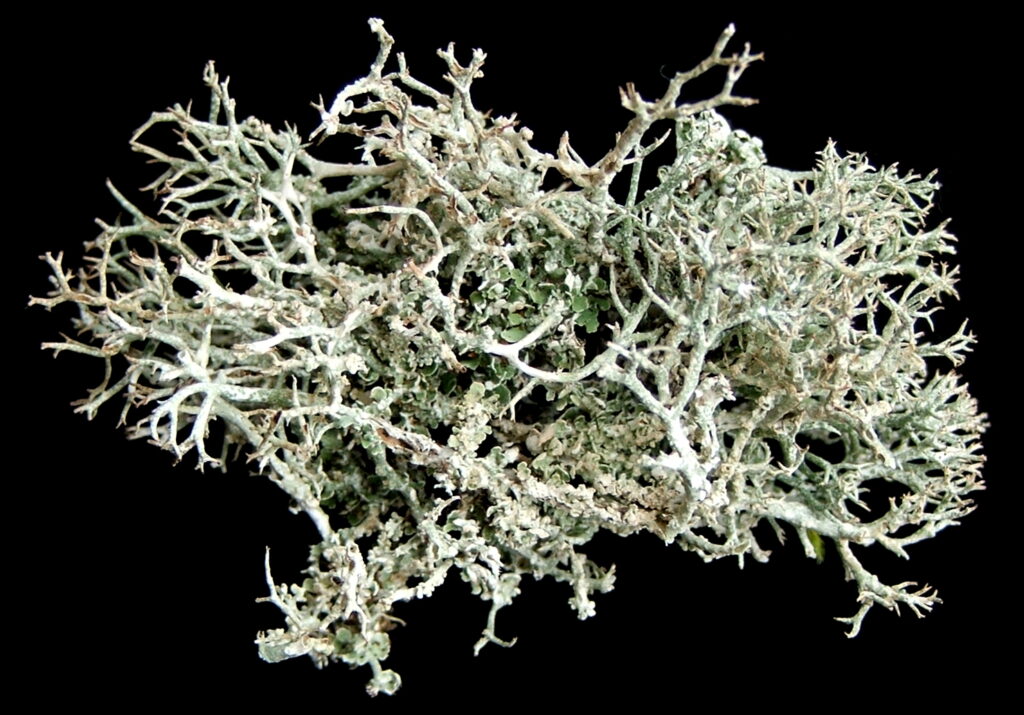
- Reindeer lichen – A pale, branching lichen that forms coral-like carpets; extremely slow growing and a key part of the tundra’s ground cover.
None of these plants dominate the landscape, but once you recognize them, they start appearing everywhere — little signs of life in an environment shaped mostly by ice and stone.
Tips for Hiking With an Eye for Flora
- Pause often — most plants are tiny and easy to miss.
- Check both sides of the trail — one side may be warmer or more sheltered and hold different species.
- Look near meltwater — these areas usually host the greatest variety.
- Tread lightly — cushion plants and lichens grow slowly and are easily damaged.
A Subtle, Rewarding Kind of Beauty
What makes East Greenland’s flora so memorable isn’t abundance — it’s resilience. Discovering a handful of bright flowers in a tundra valley or a splash of color on a windswept ridge feels like uncovering a secret. For many hikers, those small moments become some of the most surprising and moving experiences of a trek.